Teaching
Fundamentals & Innovations
Workshop
Series
Fall
2026
Schedule
All
are welcome to attend CAT's workshop
series which empowers participants to
expand their pedagogical knowledge,
explore varied teaching strategies, and
apply these methods effectively to
enhance student learning and
success.
In an effort to
accommodate your schedules, we offer
identical sessions on different dates
for most workshops and on-demand options
that can be accessed at any time from
anywhere!
To
register for a workshop, click on
the "Reserve
Your Spot" button
below.
Don't miss out —
register now while spots are still
available!
|
|
ADA
Accommodation Notice
Should you
need an ADA accommodation to participate in
a University event, program, or activity or
need to request materials in an accessible
format, please contact FIU’s Office of Civil
Rights (OCR) at 305-348-2785 or
accommodations@fiu.edu. All requests for ADA
accommodation or accessible materials for
this event must be submitted to OCR at least
seven (7) business days prior to the event
or at the earliest possible
opportunity.
|
|

|
|
Academic Freedom:
From Professional Norm to First Amendment Right
A FACULTY WORKSHOP WITH
David M. Rabban
Distinguished Teaching Professor and
Regents Chair in Law
University of Texas at Austin
Wednesday, September 16, 12:30 PM - 2:00 PM
SIPA II 103
RSVP
Copies of Prof. Rabban's book will be available for signing courtesy of the Center for the Advancement of Teaching.
Sponsored by: FIU College of Law, Faculty Senate Academic Freedom Committee, Center for the Advancement of Teaching, and UFF-FIU.
|
|
 |
|
Teaching
in the Age of AI:
Fundamentals
Tackle the
practical application of integrating AI
into your courses. Generative AI and
Large Language Models have the power to
redefine our teaching work in the
classroom. In these three half-day
workshops, participants will leverage
them to enhance their teaching and
learning practices. In particular, this
workshop will address:
- Redesigning our lessons using
AI,
- Creating AI-enhanced assignments
and assessments,
- Teaching students how to use AI
ethically, and
- Addressing academic integrity
concerns.
Facilitated by
Gáramis Campusano, EdTech Specialist,
Center for the Advancement of
Teaching
Fulfills
TA Certificate
Category:
Syllabus and Course Design or
Elective
Fulfills
Foundations of Teaching
Pathway
Category: Backward
Course Design
Oct.
29, Nov. 5, 12
(Thu.), 10:30 AM -
12:00 PM, via
Zoom
|
|
|
|
 |
|
Enhancing
Student Learning Opportunities
with Google's Gemini
Notebook
Google's Gemini
Notebook is a powerful tool for
enhancing student learning
opportunities. Whether you want to
create a podcast from student notes or
flashcards from course resources, Gemini
Notebook offers a variety of options
that can help students with knowledge
acquisition, comprehension, and
practice. By leveraging Generative AI,
Gemini Notebook stands out as a via Zoom
notebook with seemingly no limit. Learn
more about what this incredible tool can
do for you and your students by
attending this workshop.
Facilitated by
Jennifer Gebelein, Director of AI
Integration and Faculty Success, Office
of Faculty Leadership and Success
Fulfills
TA Certificate
Category:
Assessing Student Learning or
Elective
Fulfills
Foundations of Teaching
Pathway
Category:
Sep.18
(Fri.), 10:00 AM -
11:30 AM, via
Zoom
|
|
|
|
 |
|
Mindful
Mondays
Experience the
power of mindfulness meditation with
Mindful Mondays! In short, rejuvenating
lunchtime sessions, you'll explore
techniques that cultivate presence,
awareness, and resilience. Each session
features a brief introduction, a guided
meditation, and Q&A. Many find that
meditating with others enhances their
practice, so we hope you'll take a
meditation break with us. Whether you're
just starting out or have been
meditating for years, you'll acquire
practical tools to integrate mindfulness
into both your work and personal
life.
Facilitated by
Michael Creeden, Teaching Professor and
Associate Chair, Department of
English
Every
Mon. starting Sep.
28, 12:00 - 12:30
PM, via
Zoom
|
|
|
|
 |
|
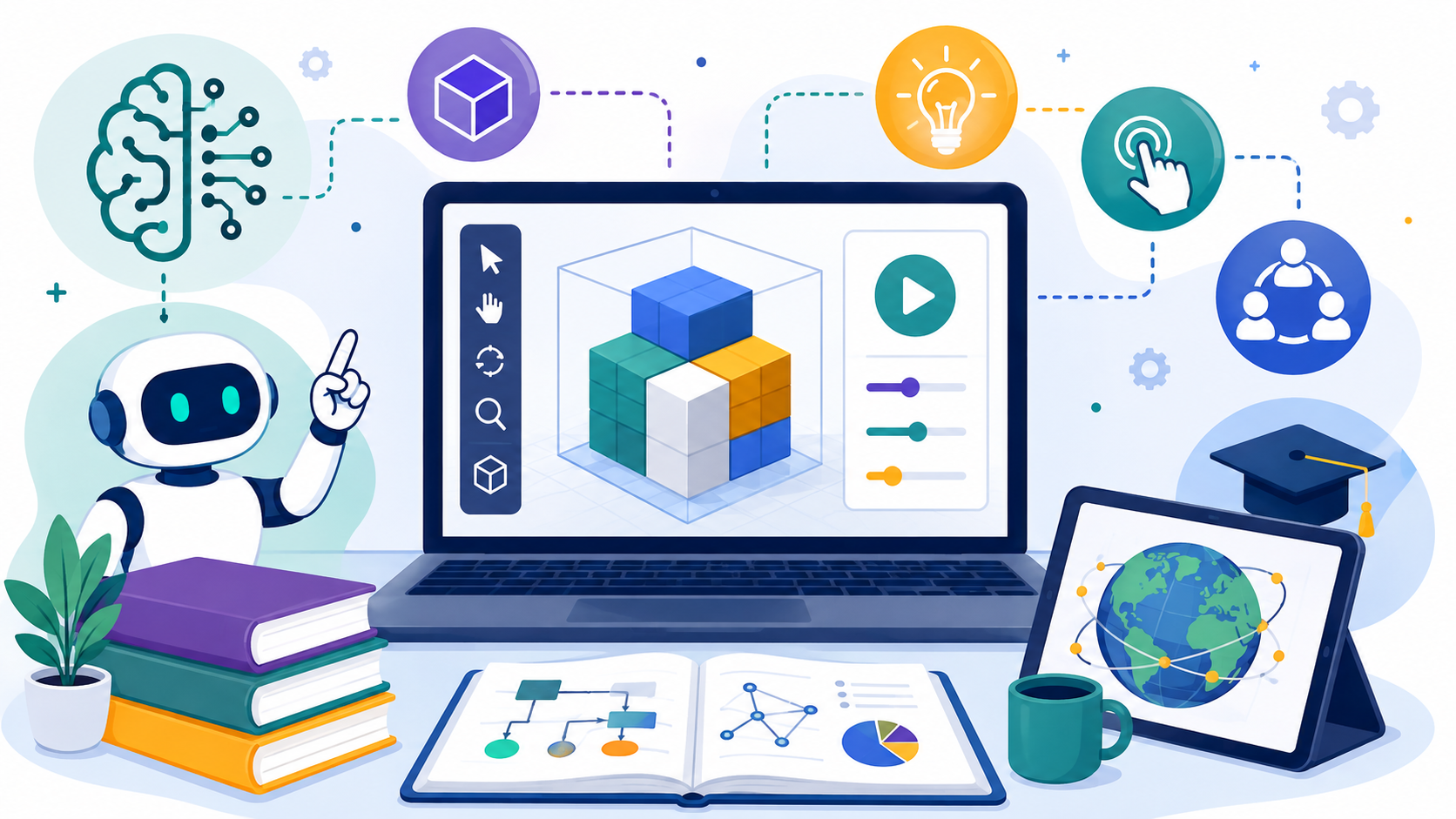
AI
Advanced Series - Beyond the
Textbook: Creating Interactive
Student Models with Generative
AI
Static reading
materials can only take learning so far.
In this hands-on workshop, discover how
to use generative AI as a personal
design assistant to build highly
interactive learning models, custom
resource portals, and dynamic lessons
for your students. You do not need any
prior coding or technical experience.
You will learn how to prompt AI tools to
generate clean HTML, CSS, and JavaScript
files that your students can simply
download and run locally on their own
devices. This approach bypasses the need
for complex web hosting platforms,
making it immediately applicable to any
discipline. The facilitator will
showcase real-world examples utilized in
undergraduate courses to inspire your
own custom creations.
Facilitated by
Edward Duran, Assistant Teaching
Professor, Department of Information
Systems and Business Analytics
Fulfills
TA Certificate
Category:
Elective
Fulfills
Foundations of Teaching
Pathway
Category: How
Learning
Works
Oct.
9 (Fri.), 1:00 PM -
2:30 PM, in
person
Nov.
6 (Fri.), 1:00 PM -
2:30 PM, in
person
|
|
|
|
 |
|
Creating
Assessments with
AI
Discover how to
design engaging, authentic assessments
that leverage generative AI tools to
enhance creativity and critical
thinking. This workshop explores
practical strategies for using AI to
develop assignments, assessments, and
feedback that promote deeper learning.
Participants will examine examples of
AI-supported assessment designs across
disciplines and discuss ways to align
them with course learning outcomes.
You’ll leave with adaptable ideas and
tools to thoughtfully integrate AI into
your assessment practices.
Facilitated by
Gáramis Campusano, EdTech Specialist,
Center for the Advancement of
Teaching
Fulfills
TA Certificate
Category:
Syllabus and Course Design or
Elective
Fulfills
Foundations of Teaching
Pathway
Category: How
Learning
Works
Oct.
19 (Mon.), 2:00 PM -
3:30 PM, in
person
|
|
|
|
 |
|
Designing
Student Learning Outcomes That
Drive Learning
Take your
Student Learning Outcomes (SLOs) to the
next level. In this active workshop,
you’ll transform existing objectives
into clear, powerful outcomes that guide
lesson design, assessment, and student
learning. Leave with SLOs that make
expectations transparent, strengthen
alignment between teaching and
assessment, and help students understand
not just what they are learning, but how
and why.
Facilitated by
Eric Simon, Associate Director of Hybrid
& Faculty Development Support
Programs, and Carlos Viera, Associate
Director of Outcomes and Innovation in
Teaching & Learning, Center for the
Advancement of Teaching
Fulfills
TA Certificate
Category:
Syllabus and Course Design or
Elective
Fulfills
Foundations of Teaching
Pathway
Category: Backward
Course Design
Oct.
21 (Wed.), 10:00 AM
- 11:30 AM, in
person
|
|
|
|
 |
|
Canvas:
Elements of Teaching - Modules
and Sequencing
This workshop
series introduces faculty to the
effective and flexible ways you can use
Canvas to support teaching, learning,
and student success. Participants will
explore practical strategies for
communicating with students, organizing
course content, designing assessments,
and providing meaningful feedback using
Canvas tools. This workshop series will
highlight approaches that promote
clarity, engagement, accessibility, and
transparency, while giving faculty time
to reflect on and refine their own
courses. Through guided demonstrations,
hands-on activities, and collaborative
discussions, faculty will leave with
updated Canvas course components and
ideas they can adapt and use right
away.
This Canvas workshop will
focus on the following topic:
- How to Use Modules to Keep My
Students on Track throughout the
Semester
Facilitated by
Eric Simon, Associate Director of Hybrid
& Faculty Development Support
Programs, and Gáramis Campusano, EdTech
Specialist, Center for the Advancement
of Teaching
Fulfills
TA Certificate
Category:
Syllabus and Course Design or
Elective
Fulfills
Foundations of Teaching
Pathway
Category: Teaching
with Canvas
Oct.
28 (Wed.), 10:00 AM
- 11:30 AM, via
Zoom
|
|
|
|
 |
|
Creating
an AI Agent
Have Generative
AI work for you by creating AI agents
that can automate processes and become
indispensable tools in your day-to-day
work. In this workshop, you will learn
about what AI agents are, how they
function, and how you can create them
quickly. You will discover how to deploy
them in the places where they make sense
so that you can increase your
productivity.
Facilitated by
Edward Duran, Assistant Teaching
Professor, Department of Information
Systems and Business Analytics
Fulfills
TA Certificate
Category:
Elective
Fulfills
Foundations of Teaching
Pathway
Category: How
Learning
Works
Oct.
30 (Fri.), 1:00 PM -
2:30 PM, in
person
|
|
|
|
 |
|
Groupwork
That Works: Designing Tasks and
Teams for Real
Learning
Design
groupwork that actually works. In this
active workshop, you’ll create a
group-worthy project or activity and
learn simple strategies for forming,
structuring, and coaching student
groups. Leave with a ready-to-use task
and tools to boost engagement,
accountability, and learning.
Groupwork That Works will focus on the
following topics:
- Day 1 - Group Worthiness,
Student Learning Outcomes,
Defining and Assigning Student
Roles, and Creating a Prompt.
- Day 2 - Peer Content Review;
Rubric; Self, Peer, and Group
Assessment.
Facilitated by
Eric Simon, Associate Director of Hybrid
& Faculty Development Support
Programs, and Helen Urpi Wagner Coello,
Assistant Director of STEM Teaching
Practice & Gateway Initiatives
Fulfills
TA Certificate
Category:
Syllabus and Course Design or
Elective
Fulfills
Foundations of Teaching
Pathway
Category: How
Learning
Works
Nov.
3 (Tue.), Nov. 10
(Tue.), 10:00 AM -
11:30 AM, in
person
|
|
|
|
|
|
|
Canvas:
Elements of Teaching - Universal
Design for Learning and
Accessibility
This workshop
series introduces faculty to the
effective and flexible ways you can use
Canvas to support teaching, learning,
and student success. Participants will
explore practical strategies for
communicating with students, organizing
course content, designing assessments,
and providing meaningful feedback using
Canvas tools. This workshop series will
highlight approaches that promote
clarity, engagement, accessibility, and
transparency, while giving faculty time
to reflect on and refine their own
courses. Through guided demonstrations,
hands-on activities, and collaborative
discussions, faculty will leave with
updated Canvas course components and
ideas they can adapt and use right
away.
This Canvas workshop will
focus on the following topic:
- How to Ensure that Materials,
Assignments, and Assessments Are
Accessible for Students
Facilitated by
Eric Simon & Gáramis Campusano,
Associate Director of Hybrid &
Faculty Development Support Programs,
EdTech Specialist, Center for the
Advancement of Teaching
Fulfills
TA Certificate
Category:
Syllabus and Course Design or
Elective
Fulfills
Foundations of Teaching
Pathway
Category: Teaching
with Canvas
Nov.
4 (Wed.), 10:00 AM -
11:30 AM, via
Zoom
|
|
|
|
 |
|
Google
Gemini Gems: Overview, Best
Practices, and Creating AI
Agents in Your Courses
Discover how to
design, build, and deploy your own
custom AI teaching and learning
assistants. In this hands-on,
pedagogy-first workshop, you will learn
how to leverage Gemini's new "Gems"
feature to foster deep student
engagement through interactive
scaffolding, active retrieval, and
Socratic tutoring. We will guide you
step-by-step through the creator
workspace, sharing a simple prompt
blueprint that transforms AI from a
low-effort homework generator into a
highly supportive, personalized
cognitive coach for your students.
Whether you want to build a via Zoom lab
assistant, a simulated roleplay partner,
or a rubric-aligned drafting coach, you
will leave this session with a fully
functional, syllabus-ready custom AI
agent designed to elevate active
learning in your courses.
Facilitated by
Jennifer Gebelein, Director of AI
Integration and Faculty Success, Office
of Faculty Leadership and Success
Fulfills
TA Certificate
Category:
Elective
Fulfills
Foundations of Teaching
Pathway
Category: How
Learning
Works
Nov.
9 (Mon.), 1:00 PM -
2:30 PM, via
Zoom
|
|
|
|
 |
|
On-Demand
Workshops
in the
Teaching
Fundamentals &
Innovations
Hub!
The Hub provides self-paced
trainings on high-impact,
research-based skills and
strategies for enhancing student
learning and teaching
effectiveness. With busy
schedules in mind, this training
hub allows you to select brief
workshops of interest that can
be accessed at any time from
anywhere!
Current workshops in the
Hub:
-
Classroom Assessment
Techniques: What are
Students Really
Understanding?
-
The Science of
Learning: Enhancing
Student Learning and
Motivation
-
What is Learning,
and How to Facilitate
It
-
From Challenges to
Connection: An
Introduction to Mindful
Communication
-
Obtaining Course
Feedback with Microsoft
Forms
-
Bigger Classes,
Bigger Connection: Real
Engagement in a World of
Distractions
-
Giving Meaningful
Feedback in Large
Classes
New workshops will be added
periodically!
|
|
Fall 2026
Faculty Reading Groups
We hope that
you'll join us for a faculty reading
group. Please review
the offerings and click on the book jacket below to
register. After you’ve registered,
you'll receive a calendar invite
with instructions on how to join the
sessions and access your
complimentary copy of the
book.
To
ensure productive discussions, we ask
that participants commit to all
scheduled meetings; please review your
calendar to confirm you can attend
before signing up.
|
 |
|
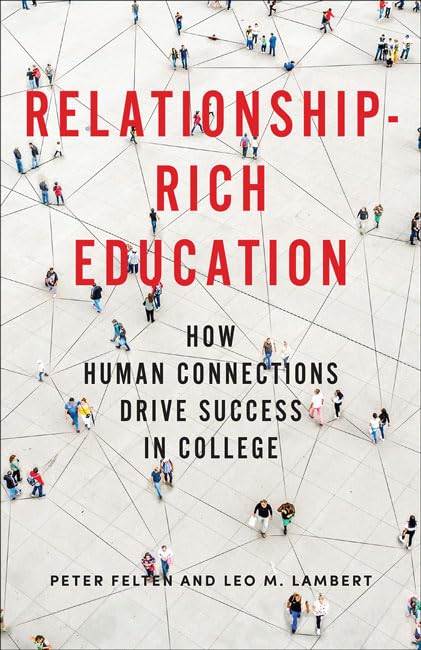
Relationship-Rich
Education
(for
Graduate
Assistants)
In
Relationship-Rich
Education, Felten
and Lambert
demonstrate that for
relationships to be
central in
undergraduate
education, colleges
and universities do
not require immense
resources,
privileged students,
or specially
qualified faculty
and staff. All
students learn best
in an environment
characterized by
high expectation and
high support, and
all faculty and
staff can learn to
teach and work in
ways that enable
relationship-based
education.
Emphasizing the
centrality of the
classroom experience
to fostering quality
relationships,
Felten and Lambert
focus on
students'
influence in shaping
the learning
environment for
their peers, as well
as the key
difference a single,
well-timed
conversation can
make in a
student's life.
They also stress
that
relationship-rich
education is
particularly
important for
first-generation
college students,
who bring
significant
capacities to
college but often
face long-standing
inequities and
barriers to
attaining their
educational
aspirations.
Facilitated
by Cayce Wicks,
Assistant Teaching
Professor;
Coordinator for
Student Success in
the Rhetoric and
Writing Program,
Department of
English
|
|
 |
|
Chapter
Chats:
How
Learning
Works
(8th
ed.)
As
educators in the
ever-evolving
landscape of higher
education, we are
continuously
challenged to keep
our courses
effective, engaging,
relevant, and
inclusive. The
updated and expanded
second edition of
How Learning Works
can help! It
incorporates the
latest research,
provides a wider
range of strategies,
and adds a new
principle to your
toolkit.
Facilitated
by Tekla Nicholas,
Associate Director,
Gateway & STEM
Partnerships, and
Helen Urpi Wagner
Coello, Assistant
Director of STEM
Teaching Practice
& Gateway
Initiatives
|
|
 |
|
Learning
through
Lived
Perspectives:
Conversations
in
Global
Learning
Global
learning grows
through connection
and reflection. This
reading group brings
faculty together to
explore how lived
experiences shape
teaching, learning,
and understanding
across disciplines.
Through shared
readings and open
dialogue,
participants will
consider approaches
to inclusive
pedagogy and
collaborative,
problem-based
learning.
Conversations will
invite reflection on
practice, challenge
assumptions, and
offer new ways to
engage students and
each other. Whether
you are new to
global learning or
building on existing
work, this is a
space to exchange
ideas, learn from
colleagues, and
strengthen your
teaching
practice.
Facilitated
by Jeanette Smith,
Director, COIL on
behalf of the Office
of Global Learning
Initiatives
|
|
 |
|
Pedagogy
of
Kindness
Reimagine
teaching as an act
of compassion and
connection. _A
Pedagogy of
Kindness_ invites
educators to center
empathy, respect,
and care in every
aspect of their
practice—from course
design to
assessment. Blending
research,
reflection, and
real-world examples,
this book shows how
kindness isn’t a
soft alternative to
rigor, but a
powerful foundation
for meaningful
learning and
inclusive
classrooms. Inspire
your teaching—and
your students—with
the transformative
power of
kindness.
Facilitated
by Christine
Martorana, Associate
Teaching Professor,
Department of
English &
Writing Across the
Curriculum
|
|
 |
|
Teaching
with AI
(2nd
Edition)
Artificial
Intelligence (AI) is
revolutionizing the
way we learn, work,
and think. Its
integration into
classrooms and
workplaces is
already underway,
transforming ideas
about creativity,
authorship, and
education. In this
practical guide,
teachers will
discover how to
harness and manage
AI as a powerful
teaching tool. José
Antonio Bowen and C.
Edward Watson
present emerging and
powerful research on
the seismic changes
AI is already
creating in schools
and the workplace,
providing invaluable
insights into what
AI can accomplish in
the classroom and
beyond.
This second edition
provides essential
updates to new
classes of
tools—such as
reasoning models,
deep research, and
agents—as well as
many new assignment
ideas and revised
prompt ideas
throughout. The
authors expand the
section on
simulations and
role-playing and
include a brand-new
section on
customized bots. A
new chapter on
ethics and
environmental
concerns rounds out
the
collection.
Facilitated
by Jenn Gebelein,
Director of AI
Integration and
Faculty Success,
Office of Faculty
Leadership and
Success
|
|
 |
|
Co-Intelligence
In
Co-Intelligence,
Mollick urges us to
engage with AI as
co-worker,
co-teacher, and
coach. He assesses
its profound impact
on business and
education, using
dozens of real-time
examples of AI in
action.
Co-Intelligence
shows what it means
to think and work
together with smart
machines, and why
it's imperative
that we master that
skill.
Mollick challenges
us to utilize
AI's enormous
power without losing
our identity, to
learn from it
without being
misled, and to
harness its gifts to
create a better
human future. Wide
ranging, hugely
thought-provoking,
optimistic, and
lucid,
Co-Intelligence
reveals the promise
and power of this
new
era.
Facilitated
by Gáramis
Campusano, EdTech
Specialist, Center
for the Advancement
of Teaching
|
|
| |